~

Author: Paulo Paiva

  • CTI Computer Telephony Integration

    CTI Computer Telephony Integration

    Computer Telephony Integration (CTI) is a technology that allows computers and telephony systems to communicate with each other. It enables businesses to integrate their telephone systems with computer applications, such as customer relationship management (CRM) systems, helpdesk software, and other business applications.

    With CTI, businesses can enhance their telephone systems functionality by adding features such as caller identification, call routing, and screen-pop of customer information. CTI also enables businesses to automate routine tasks such as call logging and tracking, and it allows agents to manage calls more efficiently.

    There are several advantages to using CTI, including improved productivity, better customer service, cost savings, and enhanced collaboration. CTI streamlines communication systems, reduces the need for additional devices, and improves the efficiency of communication processes.

    However, traditional CTI systems are often expensive and complex to set up because they require specialized hardware and software. This hardware often includes PBX (Private Branch Exchange) systems, gateways, switches, and routers, which are used to manage phone calls and routing within an organization.

    In addition to the hardware requirements, traditional CTI systems also require specialized software to manage the integration of computer and phone systems. This software can be complex to configure and maintain, and may require additional training for IT staff.

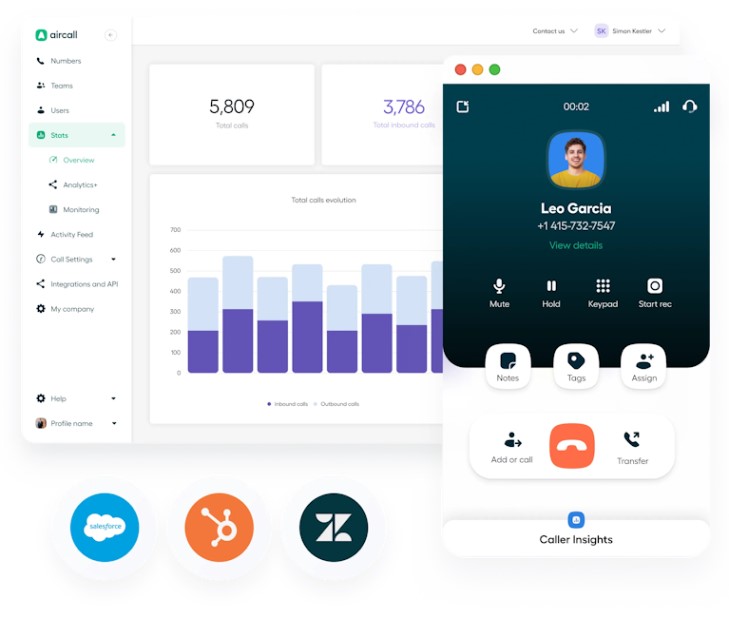
    Fortunately, advances in software-based voice solutions have greatly simplified CTI. One of the key changes on CTI has been the use of software-based voice solutions like Aircall. These VoIP solutions use software applications to manage voice communications, rather than relying on traditional hardware-based systems, with several advantages over traditional phone systems, including cost savings, improved flexibility, and advanced features such as call routing and conferencing.

    Traditionally, the cost and complexity of CTI systems could make them prohibitive for many businesses, especially smaller ones with limited budgets and resources. Nowadays software-based voice solutions, such as VoIP and softphones, offer a more flexible and cost-effective alternative, allowing businesses of all sizes to benefit from the advantages of CTI without the high costs and complex hardware requirements.

    cti software

    Softphones have greatly simplified CTI by enabling users to manage phone calls, interactive voice response, click-to-call and queue callback directly from their computer screens, with full sales and support systems integration. Highly flexible and scalable, softphones eliminate the need for specialized hardware and reduce the cost of deploying and managing communication systems. Softphones also provide advanced features that improve the efficiency of communication processes and enhance collaboration.

    In conclusion, CTI is a powerful technology that enables computers and telephony systems to work together seamlessly. Software-based voice solutions, including VoIP and softphones, have greatly simplified CTI by providing a flexible, scalable, and cost-effective alternative to traditional hardware-based phone systems. By using software based voice solutions like Aircall, businesses can improve communication, collaboration, and productivity, while also reducing costs.

    If you wish to find out more about this subject, reach us through the available channels, or schedule a meeting at your availability.

  • Sollogica: The trusted HubSpot partner in Portugal

    Sollogica: The trusted HubSpot partner in Portugal

    In the fast-paced world of business and marketing, staying ahead of the curve is essential. For companies in Portugal, there’s one name that stands out as the go-to HubSpot partner. With a reputation for excellence and a commitment to helping businesses thrive, Sollogica has become the trusted partner for HubSpot in Portugal.

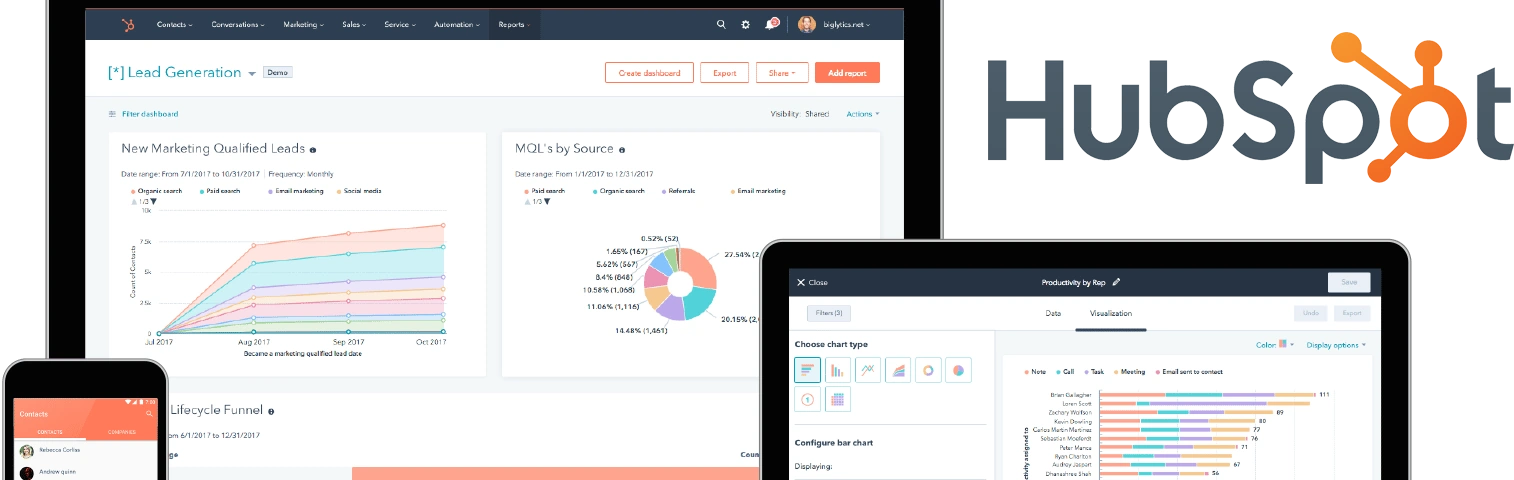
    HubSpot, a leading customer relationship management (CRM) platform, has revolutionized the way businesses manage their marketing, sales, and customer support. As a HubSpot partner, Sollogica brings this powerful solution to Portugal, enabling local and global businesses to harness the full potential of HubSpot capabilities.

    One of the standout advantages of HubSpot is its ability to seamlessly integrate marketing, sales, and support functions into a single, unified platform. This all-in-one solution streamlines operations and ensures that your team can work cohesively towards common goals. With Sollogica as your partner, you can harness the full potential of HubSpot’s CRM capabilities, allowing you to nurture leads, manage customer relationships, and provide top-notch support, all from one central hub.

    Hubspot

    Time is money in the world of business, and HubSpot understands this better than anyone. With one-click integrations with popular productivity tools, HubSpot ensures that your team can work efficiently and effortlessly. Sollogica, as your HubSpot partner, will help you leverage these integrations to boost productivity and reduce the time spent on manual data entry tasks. Whether it’s connecting your email, calendar, or other essential tools, HubSpot makes it simple.

    HubSpot believes that powerful CRM solutions should be accessible to businesses of all sizes. That’s why they offer an inexpensive entry tier that provides access to many of HubSpot’s core features. Sollogica can help you navigate HubSpot’s pricing structure, ensuring that you get the best value for your investment. Whether you’re a small startup or an established enterprise.

    Automation is the key to saving time and resources in today’s competitive landscape. HubSpot’s automation capabilities are second to none, and Sollogica can help you harness these features to their fullest extent. Say goodbye to time consuming data entry tasks, and let HubSpot handle the heavy lifting. From lead nurturing to follow-up emails, HubSpot’s automation features free up your team’s valuable time so they can focus on what really matters — growing your business.

    In conclusion, Sollogica stands as the premier HubSpot partner in Portugal, bringing the power of HubSpot’s CRM solutions to businesses of all sizes. With its all-in-one integration, seamless productivity tools, affordable entry tier, and automation capabilities, HubSpot is the ideal choice for businesses looking to thrive in the digital age.

    Partnering with Sollogica ensures that your business can make the most of HubSpot’s CRM platform, unlocking new levels of efficiency and success. Don’t miss out on the advantages of HubSpot – partner with Sollogica today and take your business to new heights.

  • Software based voice solutions

    Software based voice solutions

    In the age of digital transformation, businesses are constantly seeking ways to streamline their operations and provide exceptional customer support. One of the areas where this transformation is particularly evident is in the way companies handle phone support. The traditional CTI (computer telephony integration) systems that many companies have relied on for years are being replaced by software based voice solutions. In this article, we will explore the advantages of software based voice solutions like Aircall over legacy CTI integrations.

    Software based voice solutions are designed to be scalable. As your business grows, you can easily add new agents and expand your operations without the need for additional hardware or equipment. In contrast, CTI integrations require extensive setup and configuration to add new agents or integrate new phone systems, which can be time-consuming and costly.

    Flexibility

    Software voice systems provide greater flexibility in terms of the types of phone systems they can integrate with. Legacy CTI integrations often require proprietary hardware and software, limiting your options for choosing the phone system that best fits your business needs. With software voice systems, you can choose what works best for your business and integrate it seamlessly with your support software.

    Accessibility

    One of the biggest advantages is accessibility. Agents can access the phone support system from anywhere with an internet connection, allowing them to work remotely or from different locations. A software like Aircall, which Sollogica is an official partner can be installed on computer or mobile devices, ensuring that agents are always accessible when needed, in any location or space.

    Work from home

    Automation

    Software voice systems are designed to automate many of the tasks that were previously done manually with legacy CTI integrations. This includes tasks such as call routing, tracking and logging, and also automated ticket and contact creation. Automation not only increases performance but also reduces the risk of errors and improves the overall efficiency of your support operations.

    Analytics

    Finally, software systems provide greater visibility and analytics into your support operations. With real-time reporting and analytics, you can track key metrics such as call volume, call resolution time, and customer satisfaction. This information can be used to optimize your support operations, identify areas for improvement, and make data-driven decisions that will help you provide better support to your customers.

    analytics

    In conclusion, software based voice solutions provide numerous advantages over legacy CTI integrations. They are more scalable, flexible, accessible, automated, and provide greater visibility and analytics. As businesses continue to improve customer support, it is clear that software based voice solutions will play an increasingly important role in achieving this goal, by greatly reducing maintenance and operational costs while improving efficiency and performance.

    With the experience Sollogica had in legacy CTI implementations, once we implemented Aircall and evaluated our customers feedback, we immediately confirmed that software based phone solutions are a vast improvement to legacy CTI integrations, and we recommend any business to evaluate this change.

    If you wish to find out more about this subject, reach us through the available channels, or schedule a meeting at your availability.

  • The Mexican Blue Oyster, or if FOMO should be a driver for disruptive AI

    The Mexican Blue Oyster, or if FOMO should be a driver for disruptive AI

    With ChatGPT release back in November 2022, a revolution might have started in the way how persons and business obtain information, make decisions and plan or perform work. Despite the technology still has issues, it has already shown amazing results, like passing graduate law and business exams, solve code problems, or even make biblical verses from nonsense prompts.

    Some Universities are now taking precaution measures to ensure that student assignments are not performed by AI, and as a trick someone apparently made ChatGPT to write this. Funny or scary? Your call!

    This has caused such an impact that many are predicting the end of search engines, which of course caused a quick reaction from the tech giants Google and Microsoft to launch their own ChatGPT based AI, however the introduction to their new flagship AI powered search bots hasn’t been the best so far.

    The Mexican Blue Oyster is a reference to the AI powered Bing search demo, where the AI responding to a Mexico city nightlife planning, fabricated some details about existing bars and clubs and missed important facts on others, like one of the recommended places is the oldest gay bar in Mexico! While it might not be a harmful suggestion, I can’t help to associate this with the famous Police Academy movie scene, where things get messy after the cadets tricked their Sargent to meet at a “salad bar” which after all was quite a different place. Still funny after all those years!

    Should FOMO be a driver for disruptive AI

    Funny stuff aside there’s some serious issues at hand here, such as incorrect financial reports, fabricated information and even some reports on erratic and concerning behavior. There are several online articles I’ll just leave this one as a resume.

    As OpenAI Chief Executive Sam Altman tweeted this is still a technology in progress, however it’s achievements have caused the tech giants to race, with obvious concerns that their search business might just have went through the bin. And what this reaction have caused? A rushed product based on FOMO, or “Fear Of Missing Out”, that shows something, but is still a long way from a final product.

    The main issue to understand here is what exactly it can produce. ChatGPT doesn’t exactly know anything. It’s an AI trained to recognize patterns in vast sources of information gathered from the internet, with additional human assistance training through a model using Reinforcement Learning from Human Feedback (RLHF). While the answers you get may sound plausible, they might well be entirely wrong, since this AI chat model is expected to complement information based on the gathered data without knowing if it’s true, exact or missing key facts.

    When the tech giants (apparently?) knowing it’s limitations, start to advertise and perform demos like crunching corporate financial numbers, or trip plannings, they’re selling a concept that this iteration of AI is not the best at, and can cause unexpected results. This really gives me the vibes of “Let’s go agile” fever that took over some years ago, or “let’s microservice everything” because everyone else is doing it, or “insert xyz tech fever” that you’ve adopted without exactly knowing how to do it or if it’s actually a good path.

    Why this happens? FOMO, or Fear Of Missing Out.

    And while the band is playing and everyone’s really excited about the great innovations ahead of us, someone must ask the really important question:

    Such potentially disruptive technology, made from tech giants with a global reach, that can provoke an enormous impact on people, business, governments and entities, should be driven from FOMO and rushed into the public ?

    What if you make a political question and the answer is biased? What if it’s about race, religion, equality or freedom of speech? With the potential to influence the work, opinion and daily life of persons and companies across the globe, what fail-safes are being implemented to ensure that this technology cannot be manipulated or distorted? This is why a disruptive technology like this cannot be rushed.

    Don’t get me wrong! I’ve been a fan of most of Microsoft and Google products. In their own times, Windows, Gmail, Google Maps or Microsoft Teams, just using a couple of examples, have revolutionized the way we live, work and interact with each others and the world. The innovations they have delivered are amazing, however in this one I’m not going with the fan-base claiming that our live has just changed.

    AI is here to stay and already has great applications. Sollogica is a partner of Hubspot, which uses AI to improve user experience, however despite the recent advancements, AI chatbots still have some limitations and people should be advised to use them with caution instead of jumping straight on the bandwagon without understanding it’s dangers and limitations.

    Who knows, maybe one day you’ll end on your own version of the Blue Oyster!

  • Another satisfied customer!

    Another satisfied customer!

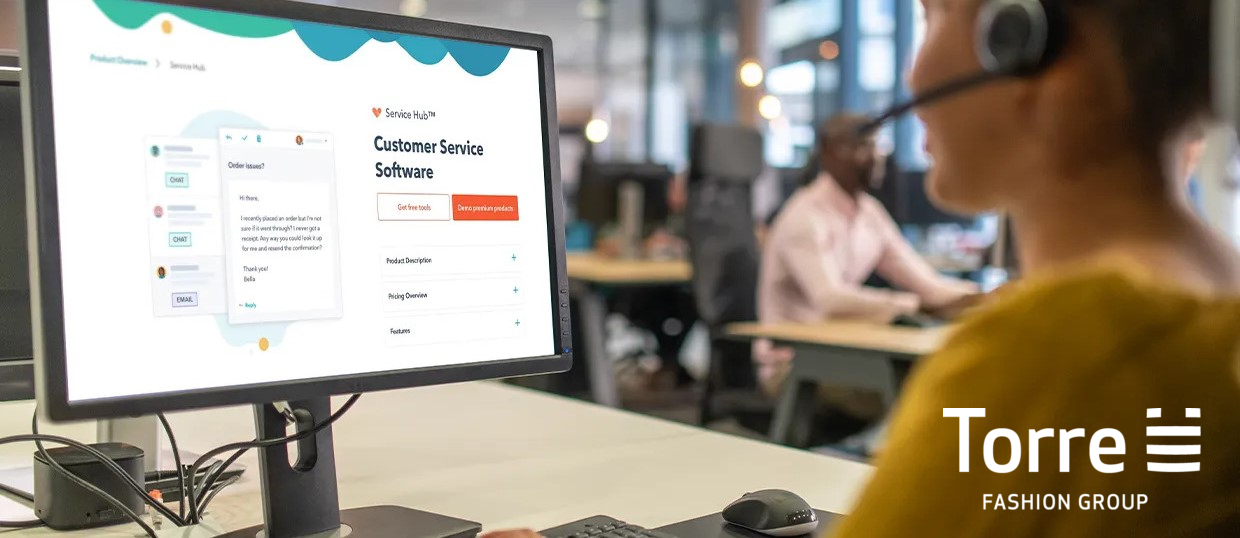
    “It was a pleasure!” These were the words of Torre Fashion Group CEO, during the formal delivery of the multi-channel support solution developed by Sollogica.

    Torre S.A. is a reference at European level in men’s ceremonial and formal clothing, with recognized tradition and experience in the sector, standing out for its strong commitment to national design, planning and production. With the goal of improving customer service processes, Torre invited Sollogica to present a proposal in order to satisfy the presented requirements.

    With the dedication and commitment that characterizes us, Sollogica’s proposal, based on the Hubspot and Aircall platforms, stood out from the competition, and through the centralization of customer information, process standardization, production of analytical information and support channels improvements, quickly turned into a successful project. In the words of Gonçalo Soares, CEO of Torre SA:

    “The partnership established with Sollogica… was a highly positive process at all levels: Technical, Collaborative, and above all in the Implementation component…

    At the technical level, we found in Sollogica the partner that provided us with a clearer picture of the path we wanted and needed, making it possible to analyze the several possibilities in an uncompromising way with the final solution. There is a permanent concern of adapting the solution to the customer’s needs, in a uninterested way, something that reinforced the context of trust that was established from the beginning.

    I speak of the Collaborative Capacity, for the positive and creative approach to the problems / situations that were successively presented, and which was always able to respond to. Balanced solutions were found for the challenges presented. Creative solutions and always with the economic angle in mind.

    Finally, in terms of Implementation, there’s nothing better than saying that the objectives we set ourselves at the start of the project were successfully met and all the project’s Stakeholders, including myself, were satisfied.”

    On our part, we can thank all the dedication and commitment Torre team provided throughout the several stages of the project, as this close collaboration was one of the key elements for its success.

  • Sollogica partnership with Aircall

    Sollogica partnership with Aircall

    We are pleased to announce Sollogica partnership with Aircall, a cloud-based provider of voice solutions with an innovative and competitive offering in the areas of call center and voice platforms.

    In an area historically dominated by complex solutions, with dependencies between hardware and suppliers, “un-agile” CTI integrations and high management, implementation and maintenance costs, Aircall provides a practical and innovative offer that removes the complexity of combining suppliers, telephone exchanges and management software, through an easy and complete service at very competitive costs.

    Where you need to be

    The phone app is located on your computer or mobile phone as needed. Connected to the respective user account, it allows to receive or perform calls anywhere via PC or mobile phone, being the ideal solution for sales and support services working in-office or remotely.

    No complex implementations

    Removes implementation and integration efforts between operators, hardware infrastructures and business management systems, through a software as a service solution with an intuitive and easy-to-use interface.

    Easily connectable

    With dozens of prebuilt integrations with the main management systems and custom integration capabilities via API, it connects with your relevant systems in order to effectively manage voice channels in sales, support or other relevant business areas.

    Aircall

    Real time information and analytics

    Provides real-time monitoring and detailed analytical capabilities, allowing to analyze teams performance or check all the voice traffic performed in a quick and user-friendly interface.

    Competitive

    With a transparent subscription model, it ensures your business voice solutions at very competitive costs compared with the current market offering.

    For Sollogica it’s a pleasure to be an ally in Portugal to such innovative products, that clearly generate added value for our customers. Aircall is a safe choice in the area of voice communications, with an offering that far exceeds expectations compared to the traditional solutions available in this area.

    If you need more information about these subjects or wish to schedule a solution demo, reach us through the available channels.

  • Customer Experience Management

    Customer Experience Management

    After detailing the foundations of this subject in the article customer relationship management, in this article we will look into customer experience management, and how this evolution translates into a new level of knowledge about the business and it’s customers, in order to translate this knowledge into added value for organizations.

    What is customer experience management

    The general definition of customer experience management, known by the acronyms CEM ou CXM, is the collection of processes that an organization uses to organize, track and follow all interactions between a customer and the business throughout the customer lifecycle. These collections of processes, in turn, aim to achieve or exceed customer expectations, in order to increase customer satisfaction and loyalty.

    In a competitive global market, where the consumers have an increasing ability to choose between products and services, organizations need to innovate to stand out from the competition. One of the currently most popular ways to stand out, is through the optimization of all contact points between the business and the customer, ensuring an optimal experience from the first contact to its conclusion.

    This optimal experience is not only intended to build customer loyalty, but also to transform the customer into an advocate for the product, brand or service, influencing in a positive way people or entities around them.

    Just like it’s predecessor, CXM is not a technological solution or a category of softwares, but a business strategy that consists on a set of processes, based on qualified and standardized customer data, activated by information technologies, therefore the steps to be taken for a successful implementation involve defining the strategy, aligning it with business processes and subsequently identifying the technologies that will ensure the acquisition and qualification of key information.

    Above all, the strategy foundations must be based on the added value intended for the organization’s processes.

    customer satisfaction

    Strategic framework

    Excellence yes, but excellence in what sense? Easier, faster, better looking, better? The characteristics of an optimal customer experience will vary depending on the customer’s expectations, together with the specifics of each product, service or business area, so the first question to consider is: “given the characteristics of the business, what is the direction that best meets customer expectations and strategy objectives”.

    In addition to defining a path, one of the crucial goals of this stage is to avoid a “better in every way” approach, something that, in addition to being utopian, will certainly be fruitless given its overly generic scope.

    Customer Journeys

    customer experience

    The second step to take involves the mapping of all customer journeys, which means identifying all interaction points between a customer and your business throughout the customer lifecycle.

    What are the entry points into your business? What actions are taken from consideration to purchase? And what steps are made after closing the deal?

    Every action involving customer interaction must be identified, monitored and optimized, in order to provide an experience that stands out in a positive way, enhancing the loyalty and promotion of your business through your customers and improving the business profitability in return.

    This step will allow to identify which business processes are involved in the different customer journeys and where/how they interact with the journeys, which allow to to transition into the technological aspects of the strategy.

    Technological framework

    With the strategy and mappings ensured, it’s now possible to identify the technological solutions that allow to complement the previous points, in order to monitor and optimize the different stages of the customer journey.

    As mentioned before, there’s not a “one size fits all” solution, since the business characteristics in conjunction with customer’s expectations and the chosen strategy will define which solutions are a best fit.

    In a general way, the technological approach must cover the following areas, at the core of the customer facing processes:

    • The promotion of the business, brand and / or products on the defined channels
    • Content Marketing and digital channels management
    • Communication automation at the several levels of the business lifecycle
    • Monitoring and optimization of commercial activities such as events, outbound calling or 1-to-1 meetings
    • Customer service management
    • And finally as an aggregation point of all previous bullets, customer data management and KPI generation

    Hopefully this article will provide a succinct but detailed look at customer experience management and the main steps for its implementation. As always, If you have any questions or want more information about these subjects, reach us through the available channels.

  • Customer Relationship Management

    Customer Relationship Management

    A popular and efficient strategy throughout the years, customer relationship management is a step towards knowing better your potential or existing customers, through a set of processes and technological solutions, implemented mainly in the areas that directly interact with the customer, such as marketing, sales, and support.

    Currently this concept has evolved a new level called Customer Experience Management, which deepens the originally defined concepts to obtain an even more detailed level of knowledge of your customer and business, through the creation of “Customer Journeys” for example. However, to achieve this level of detail, it’s first necessary to understand and implement the foundations that stem from the original concept of customer relationship management.

    CRM is not a tool or software, but a business strategy that integrates internal processes and external networks to generate added value for potential or existing customers. It is based on qualified and standardized customer data, activated by information technologies, hence its natural association with technological solutions and the category of software called with this acronym.

    However, it’s crucial to understand that achieving results through customer relationship management is not only ensured by technology, but through a business strategy that combines both processes and technology to achieve it’s goals.

    There are three strands of CRM that we list below:

    Customer-oriented business strategy from where the term customer-centric comes from, that aims to gain and retain profitable customers by generating increased value in relation to its competitors.

    Centered on automating processes in areas that interact directly with the customer, such as Marketing, Sales or Support, however it can also impact processes in other areas.

    Is the process by which the organization transforms customer and process data into relevant information that improves it’s performance, supporting decision making and process evaluation.

    The combination of these three strands allows the definition in the strategic part, the implementation in the operational part, where the various types of CRM solutions fit to implement the defined processes, such as Marketing automation, sales force automation and service automation, and in the analytical aspect, the evaluation, through solutions that mold base systems information to produce performance indicators, forecast models and other analytical information.

    One of the important steps towards a “customer-centric mindset” is the centralization of customer information, in order to provide a complete vision, consolidating all processes and interactions with the various areas of the organization. This holistic view of the customer is crucial to identify the customer’s evolution, their background in the organization and above all to provide a positive customer experience.

    In this centralization process, the integration of information across the organization’s several systems plays an important role, in order to eliminate information silos that isolate and fragment relevant information.

    Customer relationship management

    As mentioned before, customer relationship management is a business strategy, so the implementation of its customer-facing processes is one of the key aspects of the strategy.

    Campaign management in the case of Marketing, management of leads, contacts and opportunities in Sales, or service level management in the case of Service automation, are examples of processes that should be implemented and periodically revised according to the desired level of optimization.

    The way to monitor process performance will be carried out through the technological solutions implemented for this purpose, whether at operational level, in the case of CRM solutions, marketing automation, or support automation, or through analytical solutions that generate key performance indicators and other relevant aggregated data.

    Whether through the implementation of information systems, or through the optimization of these same systems to reduce the effort in “data-entry” tasks, automation plays a preponderant role in the optimization of business processes.

    The solutions at operational level, such as the aforementioned CRM, marketing automation, or support automation solutions, must ensure that information is integrated, secure, and accessible to the organization’s relevant resources, while ensuring the performance of business processes.

    These systems must also ensure a low effort in data insertion and updates, minimizing the impact that the strategy has on the organization resources. I’ve already written an article on this subject for CRM, that you can consult here.

    Another critical success factor of a CRM strategy is the quality and integrity of the information collected, since performance indicators are the main method to evaluate the success of implemented strategies, and these cannot be obtained through erroneous or missing information .

    Duplicates, redundancies or incorrect data are enemies of a successful CRM strategy, given its crucial importance in assessing the effectiveness of implemented processes, which is why this risk must be mitigated right in the design of the operational systems.

    Automation also has a preponderant role in this area, through the implementation of validation mechanisms and information complements, however one of the most relevant measures to mitigate this risk is in the solutions design phase, anticipating this issue through the type of fields used as well as the validation mechanisms they will have.

    Although this strategy has been known and adopted globally for many years, I hope this article will allow the reader to identify the foundations of CRM, guiding a successful implementation and identifying the most common problems. These foundations are equally important to evolve this concept to its most current versions, such as customer experience management, a topic that I’ll reserve for a next article.

    As always, If you have any questions or want more information about these subjects, contact us through the available channels.

  • Vaccinate

    Vaccinate

    Despite not being an information technology subject, I need to talk about one of the most relevant aspects of today’s society, at a time that we’re rushing vaccination to avoid new waves, new confinements, new deaths, new burdens on the health system and a new blow to the economy, which will potentially close another series of business that cannot resist in a context that, previously, was already not easy.

    The Covid-19 pandemic is, in the latest years, the most important factor in our lives due to the impact it generated on society, in the economy, on human relations or the absence of them, adverse factor to the human condition.

    I strongly believe in the scientific process, and confess I was somewhat reluctant at the start of vaccination, when steps were accelerated in the vaccine approval process, to provide a weapon, or more appropriately, a shield, to a society felling fearful and dismayed due to a lack of exits for a worldwide plague.

    It was the right thing to do because we couldn’t wait any longer. Because with the development of the Covid pandemic and it’s potential mutations, it can become even more dangerous, so at the first opportunity, I made the appointment and took the vaccine.

    The condition we currently live facing the pandemic, is a race against time, because the longer the virus continues to spread throughout the planet, the greater is the probability of new mutations emerge that can make existing vaccines unfeasible, therefore we have to help each others.

    Help uncle Anthony, who makes some fantastic dishes, but can’t afford to close the restaurant again.

    Help Grandma Mary who has no health or age to easily overcome the pandemic.

    Help Robert to continue his studies and to be able to be a teen again.

    Help little Emma to be able to play in the park, to meet other kids, to become a child again.

    Help each others, because its the basic premise for human evolution.

    Help each others.

    Vaccinate.

  • Turning data into knowledge

    Turning data into knowledge

    Data collection is a consolidated practice in our information society, where through websites, blogs, social networks or information systems, considerable volumes of data are accumulated. However in their raw state they bring little value. Why? Because the missing next step: Turning data into knowledge.

    The digitization of organizations brought the mechanisms for information gathering, which in general are consolidated, however the work of analyzing and shaping this data in order to produce relevant business information, is something that is done at the level of large international organizations, often on massive scales as the case of Big Data, however at smaller companies these areas are approached in a generic way and without significant results.

    Analyzing the reason for the lack of involvement in this area, we reach a combination of three main factors:

    In-depth business knowledge is essential to ensure its performance, however data-driven management methodologies are not yet fully recognized as a way to obtain this level of knowledge. This is above all a matter of perception, which needs to be mitigated.

    The perception of added value already exists, but the processes are not placed into practice due to lack of experience or knowledge. This scenario is where specialized partnerships have a determining role, by demonstrating the added value of producing knowledge from information.

    The fear of excessive costs or not obtaining a return on investment. This is mainly due to the outdated knowledge of the currently available solutions, since the democratization of technology has brought robust and effective solutions at very competitive costs.

    So how we’re turning data into knowledge

    Adjusting the solution according to complexity and size of the target organization, it’s possible to implement solutions with competitive costs, that through the existing information systems can produce outputs capable of generating new knowledge of your business, covering the desired areas in order to improve performance, effectiveness and efficiency of the organization.

    This process of turning data into knowledge is divided into the following phases:

    Usually described as ETL, the basic data preparation process is where the different data sources are normalized, corrected and formatted to allow their integration and aggregation.

    turning data into knowledge

    IT aims to identify patterns and produce metrics based on data analysis and modeling, to discover new information or to deliver previously identified business information requirements, usually defined in the form of key performance indicators.

    Usually the business already has a series of questions to which it wants answers, such as:

    how long does it take to produce and deliver a certain product” or “what is the average visit time to our site“, since these processes should start from the base business need to obtain relevant information for decision-making, however it’s important to emphasize that the discovery of new information from data analysis will always be an important point in this stage.

    The way of representing a set of information affects the ability to draw conclusions, regardless of the what information is displayed.

    A good example of this topic is the adoption of the new risk matrix to the Covid-19 pandemic, which was started out in Portugal during March this year, where through a matrix with two axes and specific coloring, greatly improved the ability to quickly understand the level of pandemic risk per region or at national level.

    Information representation covid19 risk matrix

    From the information interpretation and analysis, a new level of knowledge is obtained that potentially supports decision-making. However all steps should be reviewed in order to validate the conclusions obtained. Therefore the refining of the previous steps of this process as well as the continuous analysis of the data will produce additional information, refining this process of knowledge acquisition.

    This process when based on consolidated information collection practices, is a small step towards a new dimension of knowledge, which as mentioned, already exists through the data present in business systems, in site analytics or in digital interactions. The effort to transform this data into knowledge is minimal and the advantages are obvious, especially when one considers that they are already present and are not being used.

    If you wish to better understand how to use your business data, or want more information about these processes, reach us through the available channels.